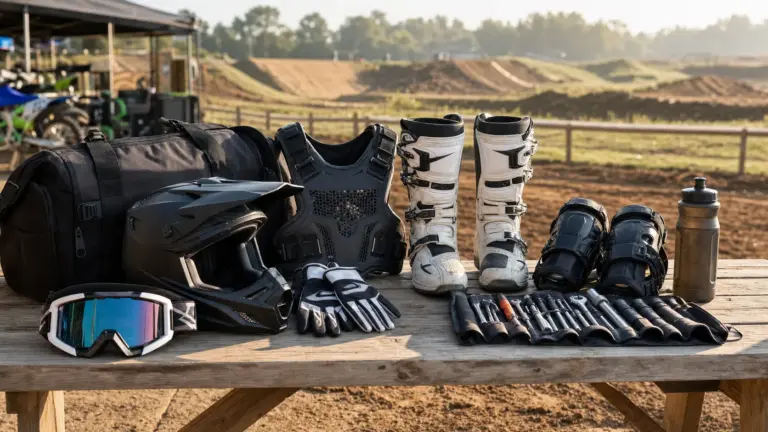

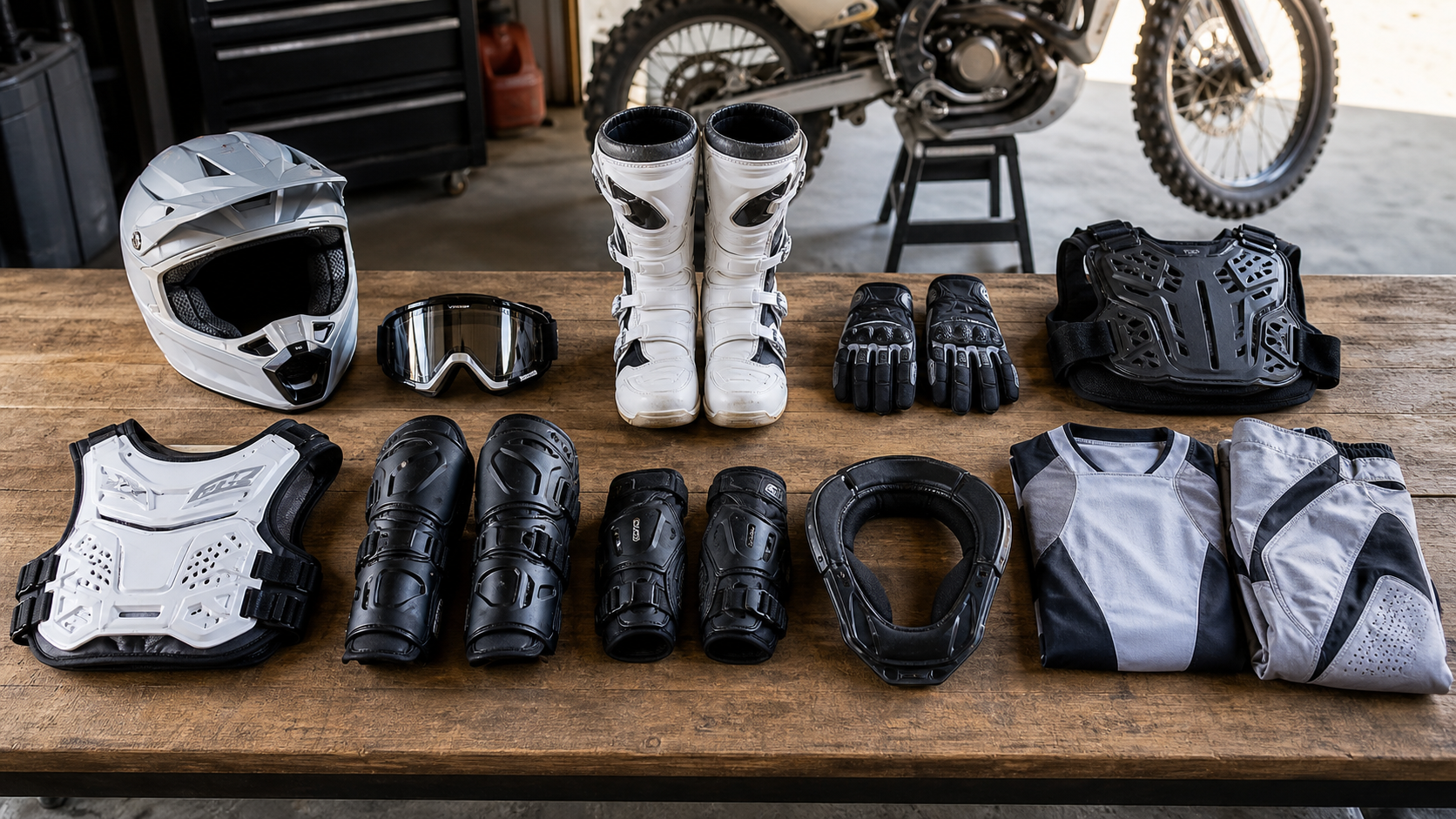
Motocross protection upgrades are easiest to choose when you think in layers. A rider does not need every premium item on day one, but every upgrade should solve a real risk: head impact, roost, twisted ankles, knee contact, grip loss, heat, mud or poor visibility.
Quick List #
- A certified motocross helmet with correct fit
- Goggles matched to light and mud conditions
- Motocross boots with strong ankle and shin support
- Body armor or a chest protector that stays in place
- Knee guards for regular practice and track days
- Gloves with secure palm grip and wrist closure
- Durable motocross pants that fit over protection
- A breathable jersey with room for armor
- Spare lenses, gloves and socks for changing conditions
- Youth-specific sizing for younger riders
1. Upgrade The Helmet First #
The helmet is the first piece to check because it protects the most important part of the rider. A good motocross helmet should sit level, feel snug around the crown and cheeks, and stay stable when the rider moves their head.
Look beyond graphics. Check certification, shell condition, strap security, liner comfort and goggle compatibility. If a helmet has taken a significant impact, replace it rather than trying to judge damage from the outside.
- Browse motocross helmets for sizes and current models
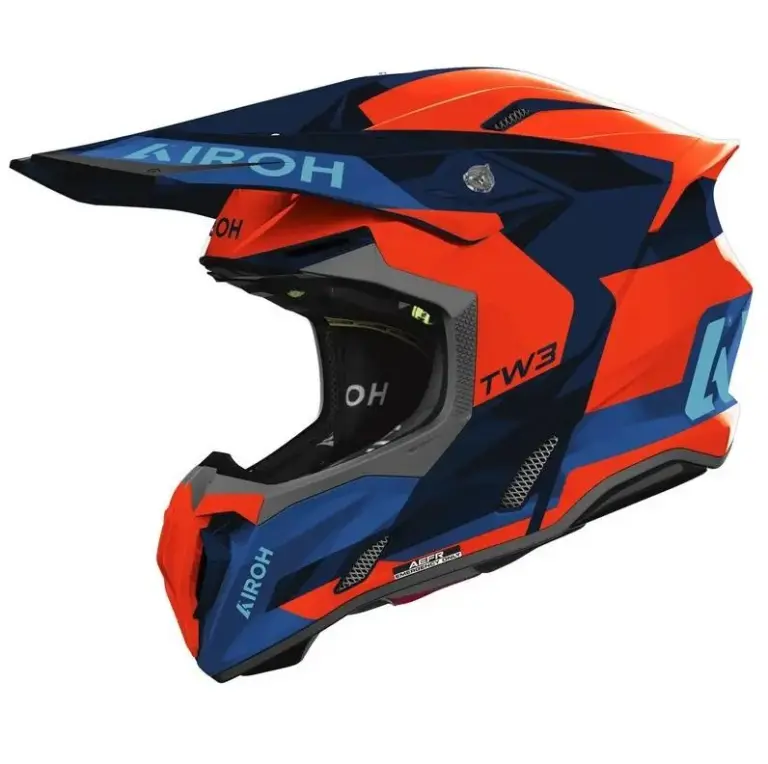
- Airoh Twist 3 Hustle Gloss Helmet as a helmet example
2. Use Goggles That Match The Track #
Vision changes every lap when the track dries, dust hangs in the air or mud starts building on the lens. Clear goggles are reliable for low light, mirror lenses help in strong sun and roll-off systems are useful when the track is wet.
A scratched or fogged lens makes the rider slower and less confident. Keeping one spare lens or second goggle in the gear bag is a small upgrade with a big track-day payoff.
- Shop motocross goggles
- 100% Accuri 2 Forecast Roll-Off Goggles for muddy riding
3. Move From Casual Footwear To Proper Boots #
Motocross boots protect the foot, ankle and shin while helping the rider grip the bike and work the controls. Casual footwear is not built for footpegs, roost, twisting force or bike contact.
Good boots should feel supportive and firm without crushing the foot. Test them with riding socks and knee protection because the full setup changes how the upper boot closes.
- Compare motocross boots
- Gaerne SG-22 Hurricane Boots as a premium boot option
4. Add Body Armor Or A Chest Protector #
Body armor and chest protectors help cover the torso from roost, direct hits and track mistakes. Chest protectors are usually lighter, while full body armor can add shoulder, elbow and back coverage.
The best choice depends on heat, riding speed and comfort. Whatever you choose, it should not lift into the helmet or slide around when standing on the pegs.
- Browse body armor and chest protectors
- Kenny Racing Body Protector Track for regular practice protection
5. Protect The Knees Before Pace Increases #
Knees hit the ground, the bike and the inside of the pants more often than beginners expect. Knee guards are a smart early upgrade because they add impact protection without complicated fitting.
Riders who train often or ride faster may later consider braces, but a stable knee guard is a practical starting point for most track days.
- Shop knee protection
- UFO Mokaite Knee Guard as a simple knee guard example
6. Choose Gloves For Grip, Not Just Color #
Gloves affect every control input. If the palm bunches, the wrist closure opens or the fingers are too long, throttle and lever feel suffer.
For hot practice days, breathable gloves are useful. For rocky routes or heavy roost, riders may prefer more reinforcement across the knuckles and palm.
- Shop motocross gloves
- UFO Skyline Cross Color Graphic Gloves for a lightweight glove option
7. Upgrade Pants Around Knee Protection #
Motocross pants should fit over knee guards or braces without pulling the fabric tight. The knee area needs room to bend, grip the bike and sit comfortably inside the boot.
If pants twist or bunch, the rider becomes distracted. Durable inner-knee panels also help because that area sees constant boot and bike contact.
- Browse motocross pants
- Test pants with knee protection and boots before judging fit
8. Use Jerseys That Work With Armor #
A motocross jersey should breathe, move and leave room for armor. A casual shirt gets heavy with sweat and is not shaped for riding position.
If you wear body armor underneath, check sleeve pull, collar comfort and shoulder movement. A good jersey should disappear once the rider is moving.
- Shop motocross jerseys
- Kenny Racing Performance Youth Socal Jersey for youth sizing reference
9. Carry Small Spares That Save The Ride #
Some of the best protection upgrades are spares: a second pair of gloves, dry socks, a clean goggle lens, tear-offs or a roll-off film. These items keep the rider comfortable and seeing clearly when conditions change.
Spare gear matters most on muddy days, hot days and longer practice sessions where one wet or damaged item can end the ride early.
- Pack spare gloves, socks and lens cleaning cloth
- Use roll-off goggles when mud is likely
10. Use Youth-Specific Gear For Kids #
Young riders should not be pushed into oversized adult gear. Protection that is too large can move around, block helmet movement and make the rider less confident.
Parents should fit helmet, goggles, boots, gloves, body protection, jersey and pants together. Growth room is useful only when the product still sits securely today.
- Kenny Racing Body Protector Track Youth for youth torso protection
- Kenny Racing Performance Youth Socal Pants for youth riding pants
How To Use This List #
Start with the weak point in your current setup. If your helmet is old, replace that first. If your boots are soft or damaged, upgrade boots before buying extra clothing. If vision is the issue, start with goggles and lenses.
The goal is not to buy everything at once. The goal is to remove the biggest risk or discomfort before the next ride, then keep improving the kit as pace, terrain and confidence increase.
Recommended RevBorn Links #
- Motocross Helmets – compare certified helmet options
- Body Armors – improve torso protection
- Knee Protection – add impact protection under pants
- Motocross Boots – upgrade ankle, shin and foot protection
- Motocross Gloves – improve grip and palm comfort
FAQ #
What is the first motocross protection upgrade to buy? #
Start with the helmet if it is old, loose or damaged. After that, boots, goggles, gloves, knee guards and body protection are the core upgrades.
Are knee guards enough for beginner riders? #
Knee guards are a strong starting point for most beginners because they add impact protection and are easier to fit than braces.
Should I buy body armor or a chest protector? #
Choose a chest protector for lighter roost and torso coverage. Choose body armor if you want broader shoulder, elbow or back coverage.
Final Takeaway #
Motocross protection upgrades should make the rider safer, calmer and more consistent. Choose fit and function first, then use product style and color as the final decision.