
Most beginner motocross gear mistakes happen before the bike even reaches the track. Riders often focus on graphics, price or one big-ticket item, then forget fit, visibility, boot support, spare gloves or how armor changes clothing size.
Quick List #
- Buying a helmet that is too loose
- Using one goggle lens for every condition
- Riding without real motocross boots
- Skipping knee protection
- Choosing gloves that bunch in the palm
- Wearing pants that do not fit over protection
- Forgetting how armor changes jersey fit
- Packing no spares for mud, heat or rain
1. Buying A Helmet With Growth Room #
A helmet should not be bought loose because the rider wants comfort or growth room. A helmet that rotates too easily can move during a crash and can also make goggles fit poorly.
Check cheek pressure, crown fit and chin strap security. If the rider is between sizes, compare shell shape and padding rather than automatically sizing up.
- Compare motocross helmets
- Airoh Twist 3 Hustle Gloss Helmet as a helmet example
2. Ignoring Goggle Lens Conditions #
Clear lenses are excellent for low light, while mirror or smoke lenses help on bright days. Muddy tracks may call for roll-off goggles. Beginners often use whatever lens came in the box and then struggle when weather changes.
Vision is confidence. A second lens or second goggle can save the day if the first one gets scratched, fogged or covered in mud.
- Shop motocross goggles
- 100% Racecraft 2 Orange Clear Goggles for a clear-lens option
- 100% Accuri 2 Forecast Roll-Off Goggles for wet conditions
3. Thinking Any Tall Boot Is Enough #
Work boots or casual high-tops do not replace motocross boots. Track riding needs shin coverage, ankle support, sole structure and buckle security that normal footwear does not provide.
Beginner riders put feet down often, hit ruts awkwardly and learn shifting under pressure. Proper boots make those early sessions safer and more controlled.
- Browse motocross boots
- Gaerne SG-22 Hurricane Boots for a strong boot example
4. Skipping Knee Guards Because Pace Is Low #
Beginners crash at lower speeds, but knees still hit the ground, the bike and the inside of the pants. Knee guards are not only for fast riders.
The best beginner setup is simple: guards that fit under pants, stay up when moving and do not interfere with the top of the boot.
- Shop knee protection
- UFO Mokaite Knee Guard as a beginner-friendly knee guard option
5. Choosing Gloves By Graphics Only #
Gloves are easy to underestimate. A glove that looks good but bunches in the palm can create blisters and make throttle control messy.
Fit should be snug, the fingertips should not be too long and the wrist closure should stay closed. Riders who overgrip may benefit from a palm material with better bar feel.
- Shop motocross gloves
- UFO Skyline Cross Color Graphic Gloves for a lightweight glove option
6. Buying Pants Before Knee Protection #
Pants that fit well without knee guards may feel tight or twisted once protection is added. That creates pressure points and can pull the pant leg out of position inside the boot.
Fit riding pants with knee guards, socks and boots. The full setup matters more than waist size alone.
- Browse motocross pants
- Check knee room in attack position before riding
7. Forgetting Armor Under The Jersey #
A jersey may fit perfectly over a T-shirt and feel too tight over body armor. Beginners often buy clothing first, then discover the shoulders, sleeves or collar fight the protection underneath.
If you plan to wear body armor, test the jersey over it. The rider should be able to breathe, turn the head and move elbows naturally.
8. Packing No Backup Gear #
Track conditions can change fast. One muddy lap can ruin vision, one wet glove can make grip miserable and one forgotten sock can make new boots painful.
Beginners do not need a professional pit setup, but they should pack practical spares: gloves, socks, a towel, lens cloth, water and anything needed to keep goggles clear.
- Pack spare gloves and dry socks
- Carry lens cloth or tear-offs for goggles
- Bring water and a towel for hot practice days
How To Use This List #
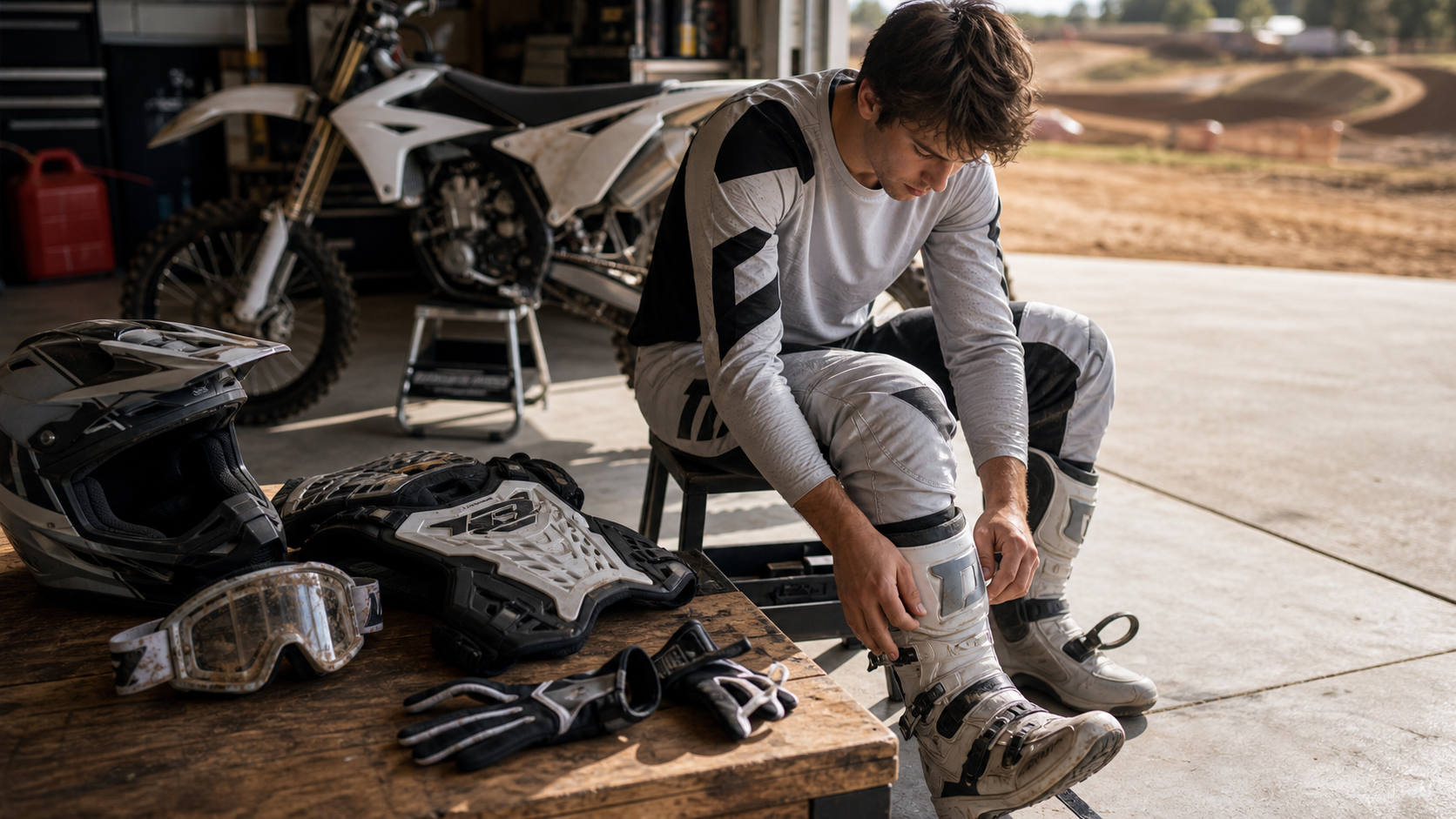
Use this list before buying your first full setup or before your first track day. Lay out helmet, goggles, boots, gloves, body protection, knee guards, jersey and pants together, then check fit as one system.
The most expensive mistake is not always buying cheap gear. It is buying gear that does not fit the rider, does not match the riding conditions or does not work with the rest of the kit.
Recommended RevBorn Links #
- RevBorn Shop – start with the full motocross gear catalog
- Motocross Helmets – check fit and certification
- Motocross Goggles – choose lenses for light and mud
- Motocross Boots – protect ankles, feet and shins
- Body Armor – add torso and upper-body protection
FAQ #
What gear should a beginner motocross rider buy first? #
Start with a correctly fitting helmet, goggles, motocross boots, gloves, knee protection and body protection. Clothing should work around those safety items.
Can beginners use cheap motocross gear? #
Budget matters, but fit and condition matter more. Avoid gear that is loose, damaged, uncertified or not built for motocross use.
How much spare gear should I bring to track day? #
At minimum, bring spare gloves, socks, water, a towel and a way to clean goggles. Muddy days may require spare lenses or roll-off goggles.
Final Takeaway #
Beginners ride better when gear fits, vision is clear and protection stays in place. Avoid these eight mistakes and track day becomes calmer, safer and much more enjoyable.