
ECE 22.06 motocross helmet listings are becoming more common, and riders should understand what to check beyond the sticker. Certification matters, but fit, strap security, shell condition and goggle compatibility matter every time you ride.
What ECE 22.06 Means For Buyers #
ECE 22.06 is a modern helmet safety standard used across Europe. When shopping, it gives riders a useful baseline that the helmet has been tested to a recognized requirement.
Certification does not replace fit. A certified helmet that is too loose, damaged or badly adjusted is still the wrong helmet for that rider.
- Progrip PG3080 Adventure ECE 22R06 Helmet as an ECE-listed product example
- NOX Cross / Offroad N633 Solid Helmet as another off-road helmet option
- Motocross helmets category to compare helmet models
Helmet Fit Checklist #
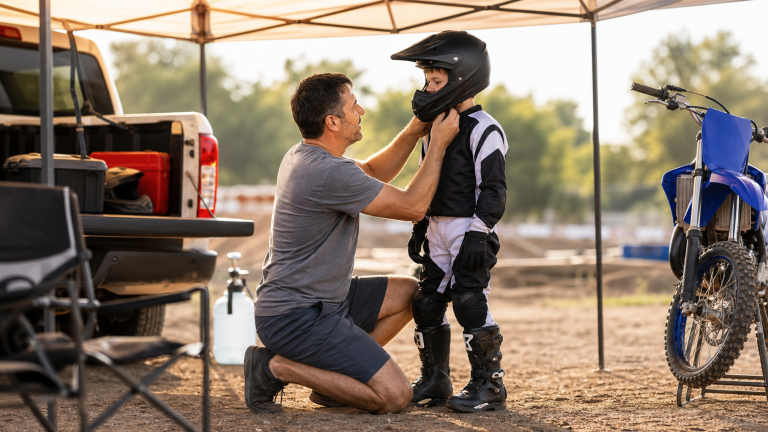
A motocross helmet should sit level, feel snug around the head and cheeks, and resist rotation when gently moved. The chin strap should close securely without choking or hanging loose.
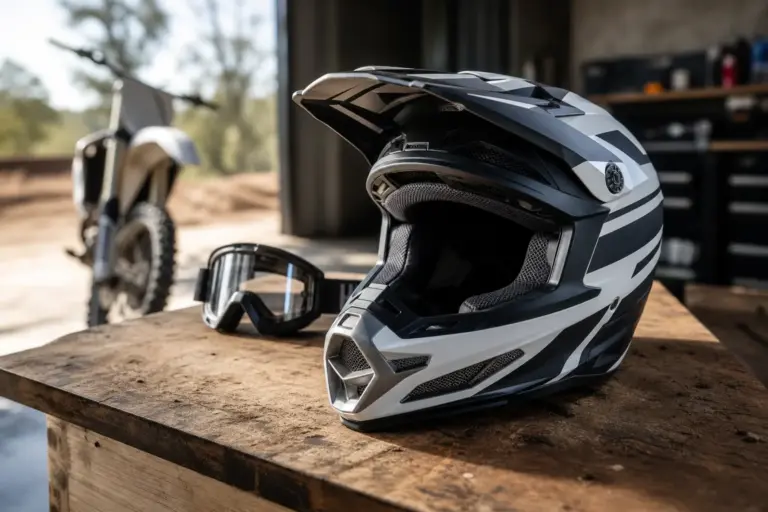
Wear goggles during the fit check. The goggles should seal cleanly against the face and sit comfortably in the helmet opening.
- No easy side-to-side rotation
- Cheek pads touch firmly without pain
- Chin strap secured every ride
- Goggles seal without pushing on the nose
When To Replace A Motocross Helmet #
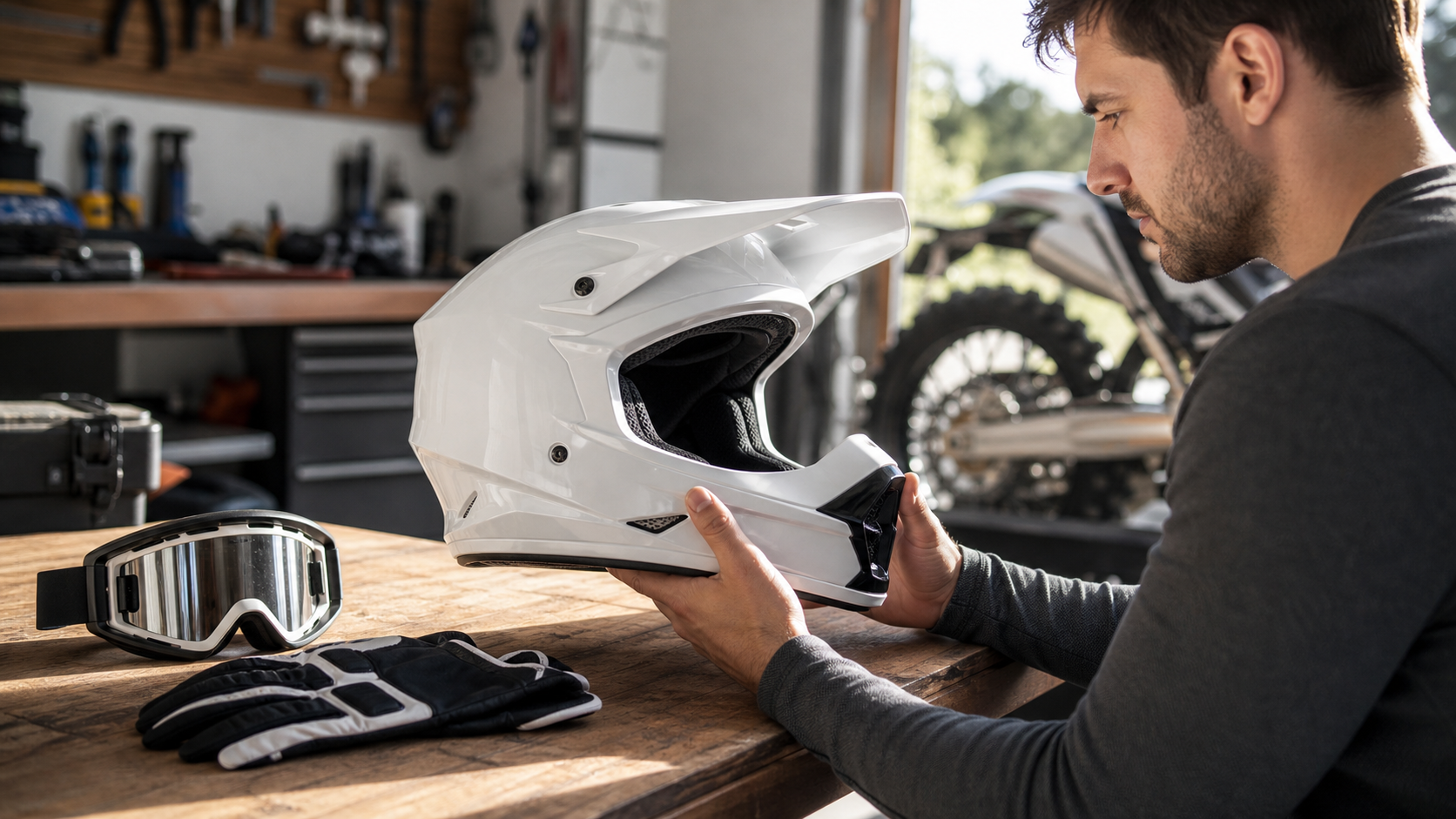
Replace a helmet after a significant crash or impact, even if the outside looks acceptable. Also replace it if the shell is cracked, the liner is damaged, the strap is compromised or the fit has loosened over time.
Helmet interiors wear from sweat, washing and repeated use. If the helmet moves more than it did when new, inspect the pads and consider replacement.
- After a significant impact
- When shell, liner or strap damage appears
- When fit becomes loose and cannot be corrected with pads
Fit, Safety And Buying Checklist #
Before choosing gear for ECE 22.06 motocross helmet, check how it fits with the rest of the riding setup. Motocross equipment works as a system: helmet and goggles affect vision, boots affect shifting and braking, knee protection affects pants, and body armor affects jersey sizing.
Do not buy only by color or discount. The best product is the one that fits correctly, stays in place while standing on the pegs and solves the riding condition you are actually facing. If you ride hot, dusty practice days, airflow and lens clarity matter. If you ride wet tracks, mud control and spare gear become more important.
- Check the item with your full riding kit, not casual clothes.
- Move into attack position and make sure nothing pinches, rotates or blocks vision.
- Inspect straps, buckles, stitching, foam and protective panels before every ride.
- Replace gear when fit becomes loose, closures fail or impact protection is damaged.
- Use category pages to compare sizes and styles before choosing one product.
When To Upgrade #
Upgrade when your current gear no longer fits, no longer stays secure or no longer matches your riding pace. A beginner who starts riding faster may need better boots, stronger knee protection or more stable body armor. A rider moving from dry practice tracks into muddy enduro routes may need different goggles, spare gloves and more durable protection.
Small wear signs matter in motocross. Stretched straps, scratched lenses, loose boot buckles, packed-out helmet liners and thin glove palms all reduce confidence. Replacing one weak item often improves the whole ride because the rider can focus on line choice instead of fighting equipment.
Recommended RevBorn Links #
- Progrip PG3080 Adventure ECE 22R06 Helmet – ECE 22.06-listed helmet example
- NOX Cross / Offroad N633 Solid Helmet – off-road helmet option with clean English slug
- Motocross Helmets Category – browse helmet sizes and models
Quick FAQ #
Is ECE 22.06 better than older helmet standards? #
ECE 22.06 is a newer European helmet standard with updated testing requirements. Riders should still choose by fit, condition and intended use.
Can I keep riding after dropping my helmet? #
A small drop with no impact load may not ruin a helmet, but any hard crash or significant impact should be treated seriously. Inspect carefully and replace when in doubt.
Should motocross goggles be tested with the helmet? #
Yes. Goggles should seal correctly and not create pressure points once the helmet is on and strapped.
Final Buying Advice #
Use ECE 22.06 as a strong starting point, then check fit, strap security, goggle compatibility and helmet condition. The safest helmet is the certified one that fits correctly every ride.