

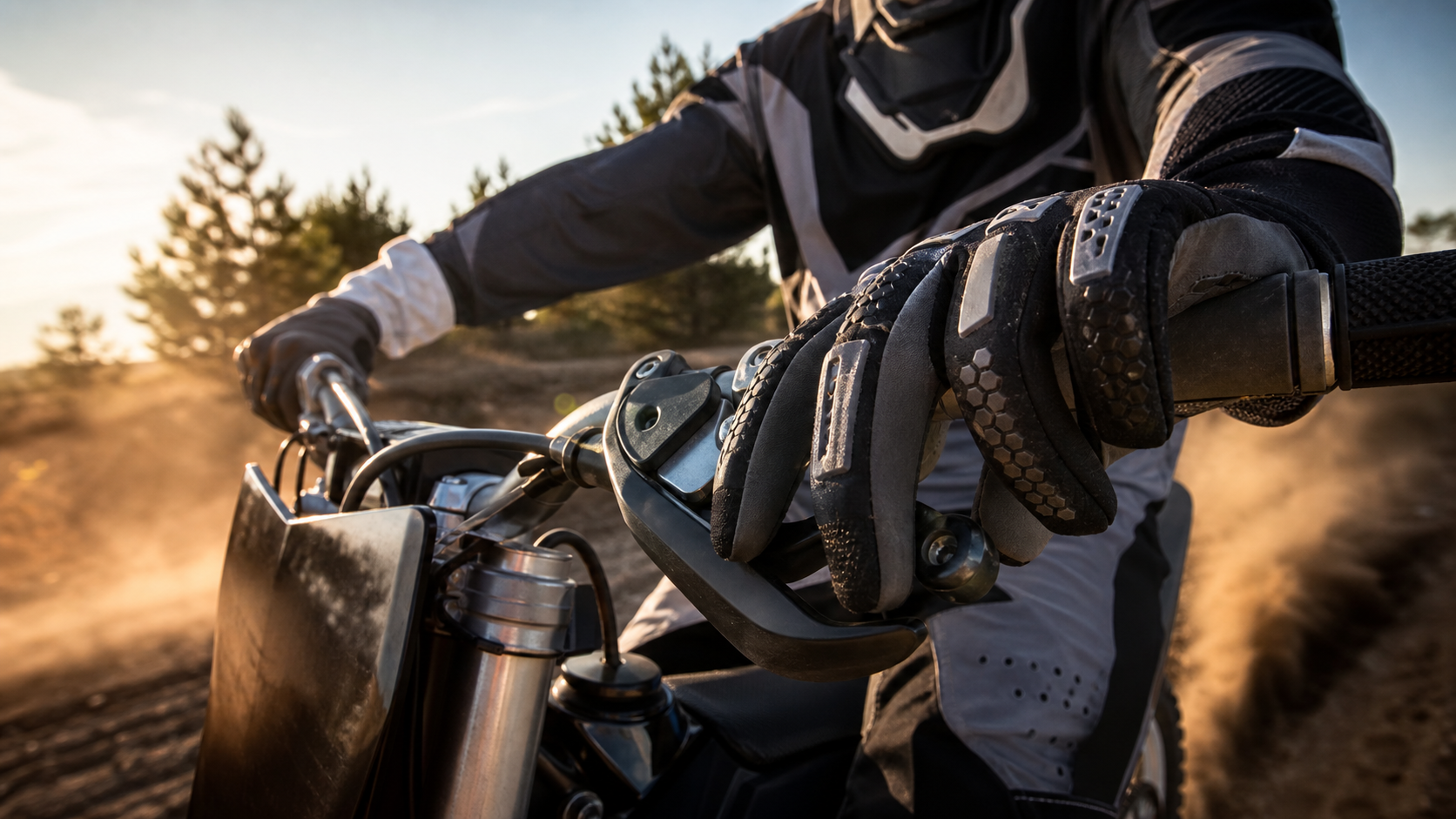
Motocross gloves are small, but they affect every lap. A good glove improves grip, protects the palm and lets you feel the throttle, clutch and brake without bunching fabric at the fingers.
How Tight Should Motocross Gloves Be? #
Motocross gloves should feel snug but not restrictive. The palm should not fold when you close your hand, and the fingertips should not press hard into the ends of the glove.
Too loose creates blisters and sloppy control. Too tight can reduce circulation and make your hands tired quickly.
- No large palm wrinkles when gripping handlebars
- Enough finger length to bend naturally
- Cuff closes securely without cutting into the wrist
Palm Feel And Throttle Control #
Thin palms give better bar feel, while reinforced palms may last longer and reduce abrasion. Riders who train often should balance durability with sensitivity.
If your hand slips on the throttle or you overgrip because the glove feels vague, try a different palm material or size.
- UFO Skyline Cross Color Graphic Gloves for a lightweight riding glove option
- 100% Cognito Smart Shock Army Gloves for a more protective glove example
Ventilation And Weather #
Hot tracks need breathable gloves that dry quickly. Wet or cold riding may require a glove that resists wind and holds warmth, but bulky gloves can reduce lever feel.
Many riders keep two pairs in the gear bag: one light pair for heat and one spare pair for mud, rain or long practice days.
- Lightweight gloves for summer practice
- More reinforced gloves for rocky or brush-heavy riding
- Spare gloves for muddy sessions
Fit, Safety And Buying Checklist #
Before choosing gear for motocross gloves fit guide, check how it fits with the rest of the riding setup. Motocross equipment works as a system: helmet and goggles affect vision, boots affect shifting and braking, knee protection affects pants, and body armor affects jersey sizing.
Do not buy only by color or discount. The best product is the one that fits correctly, stays in place while standing on the pegs and solves the riding condition you are actually facing. If you ride hot, dusty practice days, airflow and lens clarity matter. If you ride wet tracks, mud control and spare gear become more important.
- Check the item with your full riding kit, not casual clothes.
- Move into attack position and make sure nothing pinches, rotates or blocks vision.
- Inspect straps, buckles, stitching, foam and protective panels before every ride.
- Replace gear when fit becomes loose, closures fail or impact protection is damaged.
- Use category pages to compare sizes and styles before choosing one product.
When To Upgrade #
Upgrade when your current gear no longer fits, no longer stays secure or no longer matches your riding pace. A beginner who starts riding faster may need better boots, stronger knee protection or more stable body armor. A rider moving from dry practice tracks into muddy enduro routes may need different goggles, spare gloves and more durable protection.
Small wear signs matter in motocross. Stretched straps, scratched lenses, loose boot buckles, packed-out helmet liners and thin glove palms all reduce confidence. Replacing one weak item often improves the whole ride because the rider can focus on line choice instead of fighting equipment.
Recommended RevBorn Links #
- UFO Skyline Cross Color Graphic Gloves – lightweight motocross glove option
- 100% Cognito Smart Shock Army Gloves – glove option with added protection
- Motocross Gloves Category – browse more glove fits and styles
Quick FAQ #
Should motocross gloves be tight or loose? #
They should be snug. Loose gloves can bunch in the palm, while overly tight gloves reduce comfort and lever control.
Do motocross gloves need knuckle protection? #
Knuckle protection is useful for roost, branches and impact, but some riders prefer lighter gloves for maximum feel.
How often should I replace motocross gloves? #
Replace gloves when the palm thins, seams split, grip panels peel or the cuff no longer closes securely.
Final Buying Advice #
Good motocross gloves disappear once you ride: no bunching, no slipping and no pressure points. Choose fit first, then decide how much protection and ventilation you need.