
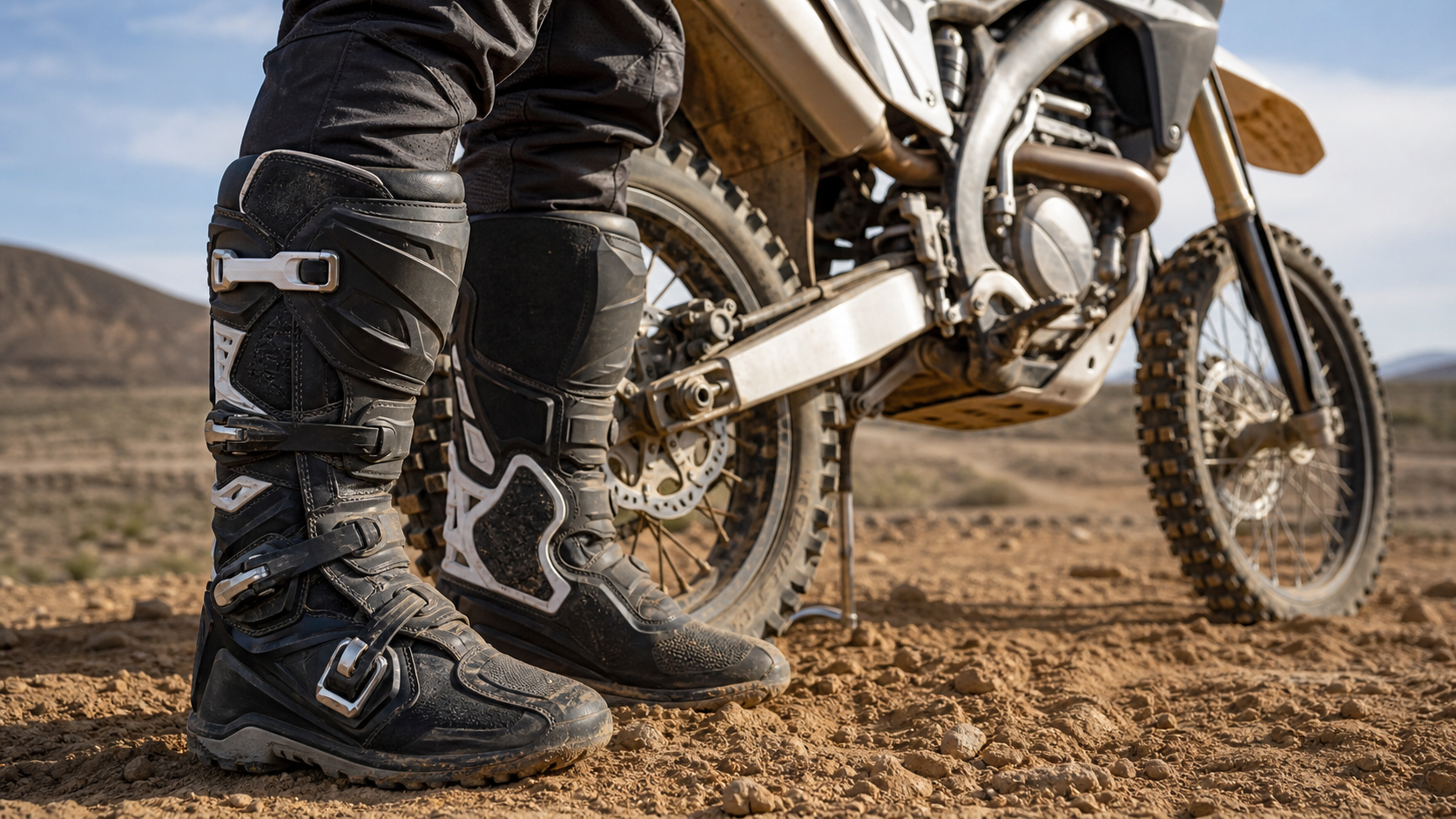
Motocross boots should feel secure, supportive and firm without crushing the foot. They are not meant to feel like casual shoes. The goal is protection, bike control and comfort that improves as the boot breaks in.
Toe Room And Foot Hold #
Your toes should have a little room at the front, but the foot should not slide forward when you brake or land. Try boots with the socks you actually ride in.
Heel lift should be limited. A small amount can happen in a stiff new boot, but excessive movement can create blisters and reduce control.
- Use riding socks during fit checks
- Stand on the balls of your feet like you would on pegs
- Check that the toe box does not crush the foot when shifting
Buckles, Calf Room And Knee Protection #
Boot buckles should close firmly without forcing the strap. If you wear knee guards or braces, test the full setup because calf and shin volume changes once protection is added.
The top of the boot should hold the lower leg without pinching. Too much pressure at the top can become painful during longer sessions.
- Gaerne SG-22 Hurricane Boots for a premium boot example
- UFO Mokaite Knee Guard to test boot overlap with knee protection
Break-In: Firm Is Normal, Pain Is Not #
New motocross boots often feel stiff. Walking around, light practice and repeated buckle adjustments help the boot settle, but sharp pressure points are a warning sign.
Do not size up only to make a stiff boot feel softer. A boot that is too large can reduce shifting accuracy and footpeg feel.
- Expect stiffness at first
- Do not ignore numbness or hot spots
- Re-check buckle tension after the first few rides
Fit, Safety And Buying Checklist #
Before choosing gear for how should motocross boots fit, check how it fits with the rest of the riding setup. Motocross equipment works as a system: helmet and goggles affect vision, boots affect shifting and braking, knee protection affects pants, and body armor affects jersey sizing.
Do not buy only by color or discount. The best product is the one that fits correctly, stays in place while standing on the pegs and solves the riding condition you are actually facing. If you ride hot, dusty practice days, airflow and lens clarity matter. If you ride wet tracks, mud control and spare gear become more important.
- Check the item with your full riding kit, not casual clothes.
- Move into attack position and make sure nothing pinches, rotates or blocks vision.
- Inspect straps, buckles, stitching, foam and protective panels before every ride.
- Replace gear when fit becomes loose, closures fail or impact protection is damaged.
- Use category pages to compare sizes and styles before choosing one product.
When To Upgrade #
Upgrade when your current gear no longer fits, no longer stays secure or no longer matches your riding pace. A beginner who starts riding faster may need better boots, stronger knee protection or more stable body armor. A rider moving from dry practice tracks into muddy enduro routes may need different goggles, spare gloves and more durable protection.
Small wear signs matter in motocross. Stretched straps, scratched lenses, loose boot buckles, packed-out helmet liners and thin glove palms all reduce confidence. Replacing one weak item often improves the whole ride because the rider can focus on line choice instead of fighting equipment.
Recommended RevBorn Links #
- Gaerne SG-22 Hurricane Boots – premium motocross boot example
- Gaerne SG-12 Boots – popular high-protection boot option
- Motocross Boots Category – compare sizes, styles and models
Quick FAQ #
Should motocross boots feel stiff? #
Yes. Stiffness is normal because boots are built for protection and support. Painful pressure points are not normal.
Can motocross boots be too big? #
Yes. Oversized boots can make shifting harder and allow the foot to move inside the boot.
Do knee guards affect boot fit? #
They can. Always test boots with the socks and knee protection you plan to ride with.
Final Buying Advice #
Motocross boots should hold the foot, support the ankle and work with your knee protection. Fit the whole riding setup together, not the boot alone.