

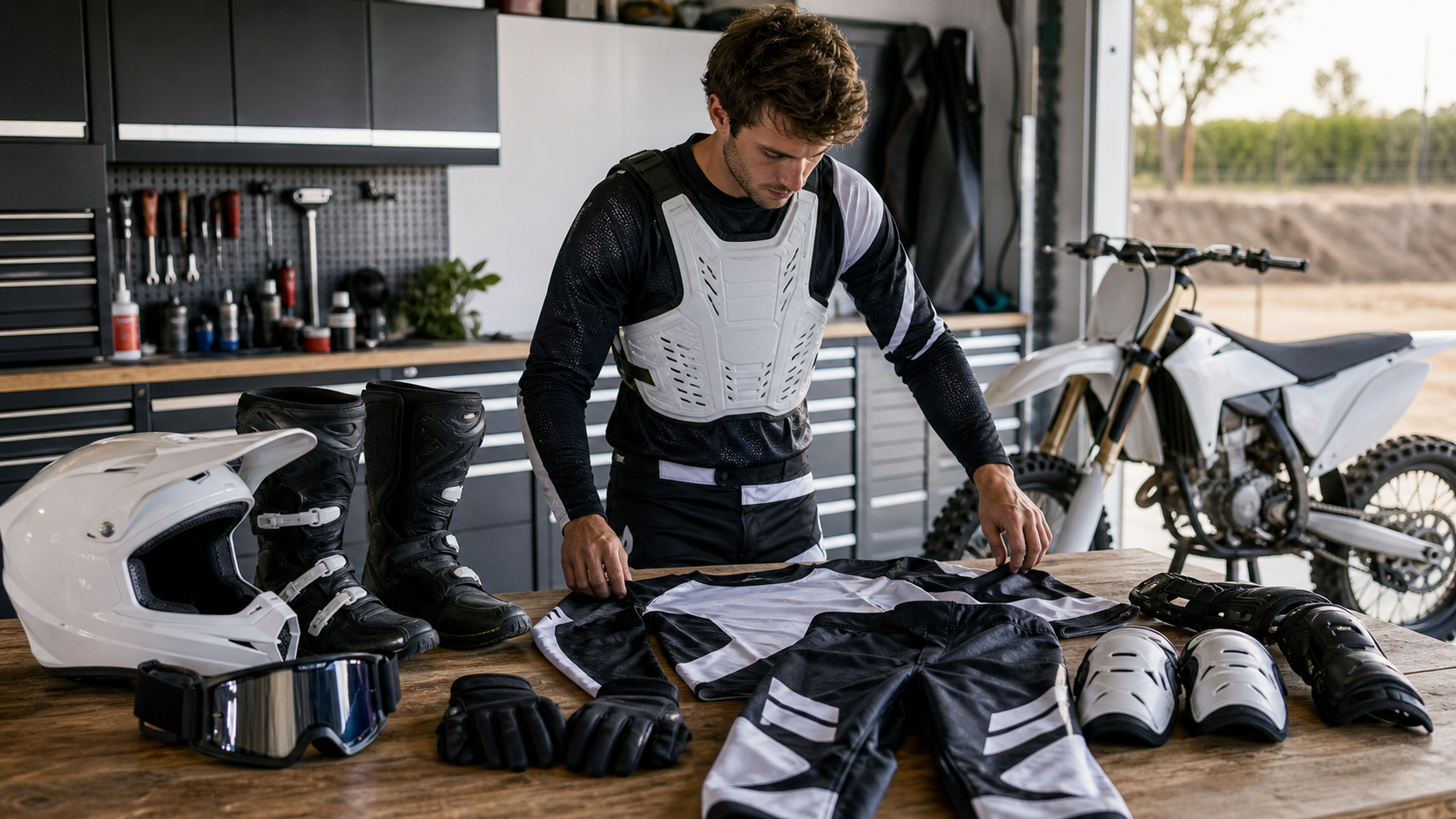
Knowing what to wear to motocross practice helps you ride safer, stay comfortable and avoid turning a good session into a rushed one. The right setup starts with impact protection, then adds visibility, grip, ankle support and clothing that can handle movement, heat and mud.
Start With The Non-Negotiables #
Every practice bag should begin with a certified motocross helmet, clean goggles, proper riding boots and gloves. These pieces protect the parts of the body that take repeated hits from roost, ruts, footpeg contact and awkward landings.
If one of these items is worn out, replace it before adding extras. A fresh jersey looks good, but a cracked helmet peak, loose boot buckle or torn glove palm affects riding immediately.
- Motocross helmets with a secure strap and correct shell size
- Motocross goggles with clean foam and a lens suited to the weather
- Motocross boots with working buckles and firm ankle support
- Motocross gloves that stay snug at the palm and wrist
Add Body And Knee Protection #
Practice pace can change quickly once the track dries out or gets rough. A chest protector or body armor helps shield the torso from roost and impact, while knee protection helps reduce bruising and twisting force around one of the most exposed joints.
Choose gear that stays in place while standing on the pegs. If straps slide, edges dig in or armor shifts when you squat, it will feel worse after twenty minutes on the bike.
- Body armor and chest protectors for torso coverage
- Knee guards for regular practice and training days
- Riding socks that reduce boot rub and help knee protection sit cleanly
Dress For Heat, Mud And Movement #
Motocross clothing is not just decoration. Jerseys and pants should breathe, stretch where needed and survive contact with the seat, braces and boots. Avoid casual clothes because they hold moisture, snag easily and do not fit correctly over protective gear.
For hot practice days, prioritize airflow and lighter gloves. For colder or muddy days, keep spare gloves and dry socks in the gear bag so you can reset between sessions.
- Motocross jerseys with room for armor
- Motocross pants with knee room and durable inner panels
- Spare gloves, socks and a towel for longer practice days
Fit, Safety And Buying Checklist #
Before choosing gear for what to wear to motocross practice, check how it fits with the rest of the riding setup. Motocross equipment works as a system: helmet and goggles affect vision, boots affect shifting and braking, knee protection affects pants, and body armor affects jersey sizing.
Do not buy only by color or discount. The best product is the one that fits correctly, stays in place while standing on the pegs and solves the riding condition you are actually facing. If you ride hot, dusty practice days, airflow and lens clarity matter. If you ride wet tracks, mud control and spare gear become more important.
- Check the item with your full riding kit, not casual clothes.
- Move into attack position and make sure nothing pinches, rotates or blocks vision.
- Inspect straps, buckles, stitching, foam and protective panels before every ride.
- Replace gear when fit becomes loose, closures fail or impact protection is damaged.
- Use category pages to compare sizes and styles before choosing one product.
When To Upgrade #
Upgrade when your current gear no longer fits, no longer stays secure or no longer matches your riding pace. A beginner who starts riding faster may need better boots, stronger knee protection or more stable body armor. A rider moving from dry practice tracks into muddy enduro routes may need different goggles, spare gloves and more durable protection.
Small wear signs matter in motocross. Stretched straps, scratched lenses, loose boot buckles, packed-out helmet liners and thin glove palms all reduce confidence. Replacing one weak item often improves the whole ride because the rider can focus on line choice instead of fighting equipment.
Recommended RevBorn Links #
- Airoh Twist 3 Hustle Gloss Helmet – a strong helmet example for riders building a practice setup
- Kenny Racing Body Protector Track – torso protection for regular practice sessions
- UFO Mokaite Knee Guard – simple knee protection to add under riding pants
Quick FAQ #
Can I practice motocross in normal boots? #
No. Normal boots do not provide the ankle, shin and footpeg protection expected for motocross. Use proper motocross boots before riding on track.
Do beginners need body armor? #
Beginners benefit from body armor because they are still learning balance, braking and body position. Protection should fit securely and not restrict breathing or movement.
Should practice gear be different from race gear? #
Practice gear can be the same as race gear. The most important difference is condition: practice items are used often, so check wear before every ride.
Final Buying Advice #
Build your practice kit from protection outward: helmet, goggles, boots, gloves, armor, knees, jersey and pants. Once those basics are correct, small comfort items like spare gloves and dry socks make each session easier.