
Filters
310,99 €
-10%345,99 €
UFO Xander Extreme Cross / Offroad Boots

UFO Xander Extreme Cross / Offroad boots, Black and White, Sizes 42 to 46.
0 Reviews2 colors available
190,99 €
-20%238,99 €
Kenny Racing Track T2 Boots
Kenny Racing Track T2 motocross and enduro boots with a rigid construction, waterproof gussets, micrometric buckles and EN 13634.
0 Reviews5 colors available
136,99 €
-6%144,99 €
Kenny Racing Track Youth Graphic Speed Helmet
Kenny Racing Track Youth Graphic Speed helmet with ECE 22-06 homologation, sizes L, M, S.
0 Reviews3 colors available
From149,99 €
-15%176,99 €
Kenny Racing Track Graphic Focus Helmet
Kenny Racing Track Graphic Focus Helmet with an injected plastic shell, antibacterial lining, DD fastening and ECE 22.06.
0 Reviews5 colors available
149,99 €
-20%187,99 €
Kenny Racing Track Graphic Speed Helmet
Kenny Racing Track Graphic Speed Helmet with an injected plastic shell, antibacterial lining, DD fastening and ECE 22.06.
0 Reviews4 colors available










Frequently asked questions about Motocross Protection
What protective gear do I really need to start motocross?
At minimum: a properly-fitting MX helmet, goggles, gloves, boots and a chest protector or roost guard. Once you progress past slow trail riding, add knee braces (not just guards) and a back protector. Body armour, neck brace and elbow guards round out a full kit.
How often should I replace my motocross helmet?
Immediately after any serious impact, regardless of whether the shell looks damaged — the inner EPS foam compresses on impact and will not protect you a second time. Without a crash, replacement intervals differ by model, so check the helmet maker's guidance.
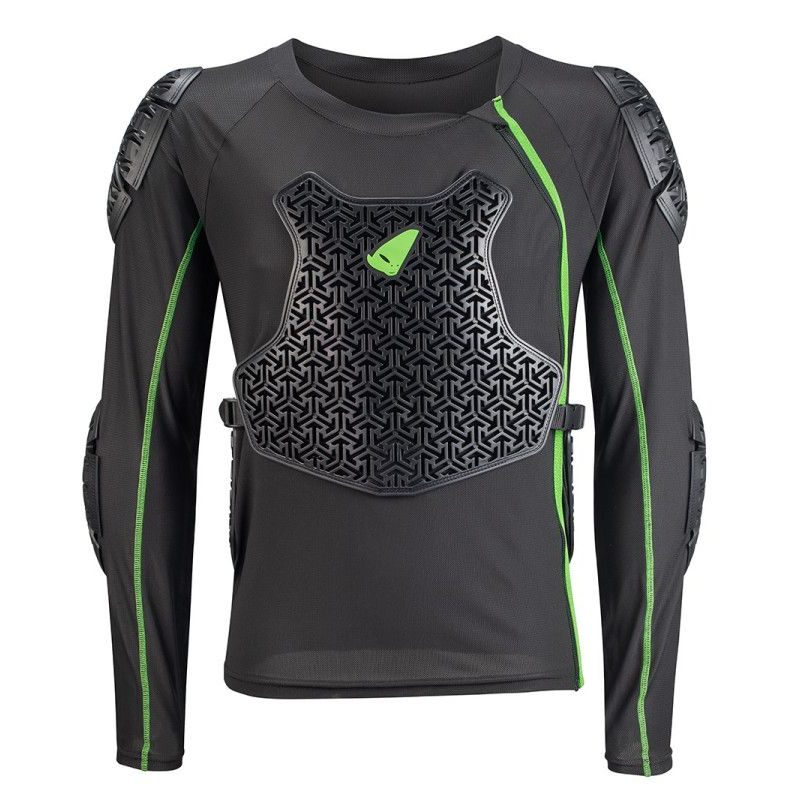
What protection level should I look for on body armour?
Some titles name the protection level, Level 1 or Level 2. Check the title and the product page for the level of the model you are looking at, and pick the one that matches how and where you ride.
Can I use the same protective gear for motocross and enduro?
You can, but compromises exist. MX-specific helmets and boots are stiffer and more ventilated; enduro versions are slightly more flexible and have softer soles for technical foot-down moments. If you do both, lean toward enduro-spec for the most versatile setup.
What is the difference between knee guards and knee braces?
Knee guards are soft sleeves with a hard cap over the kneecap, and they protect against roost and minor bumps. Knee braces are rigid hinged units with metal or composite uprights that limit how far the knee can move sideways or backwards. Check the product title for which type you are buying.
Do I need youth-specific gear for kids, or can they use small adult sizes?
Always use youth-specific gear. Children's helmets are sized for smaller skull dimensions. Adult body armour and boots are too rigid and heavy for a child's frame, and they restrict movement.