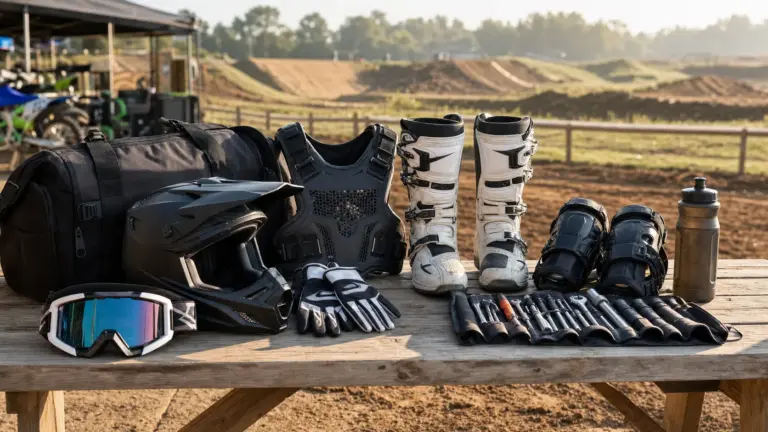

Lightweight motocross upgrades are one of the easiest ways to ride longer with less fatigue. Shaving grams off your helmet, body armor and knee protection lowers the load your neck, shoulders and legs carry every lap, so you stay fresher and make fewer tired-rider mistakes late in a moto. This guide explains which lightweight gear upgrades make the biggest difference and how to choose them without giving up protection.
What Lightweight Motocross Upgrades Actually Mean #
A lightweight upgrade is any piece of kit that does the same job as your current gear for less weight, better airflow or less bulk. It is not about stripping protection away. The goal is to move freely, breathe better and reduce the energy you spend just carrying and fighting your equipment.
Modern materials make this possible. Composite and fibreglass helmet shells, graphene and 3DF foams, perforated meshes and laser-welded jerseys all cut weight while keeping certified impact performance. The best upgrades target the gear you wear highest on the body and longest during a ride.
Why Lighter Gear Reduces Rider Fatigue #
Weight high on the body costs the most energy. A heavy helmet tires your neck on rough tracks, and bulky armor restricts the arm and shoulder movement you need in attack position. Reducing that load lets you hold good body position for more laps.
- A lighter helmet reduces neck strain on braking bumps and jumps.
- Vented body armor keeps core temperature down so you fade later.
- Slim knee protection lets you grip the bike and move on the pegs.
- Breathable kit cuts overheating, the main cause of late-moto mistakes.
Lightweight Helmet Upgrades #
The helmet is the highest weight on your body, so it is the first place a lightweight motocross upgrade pays off. Look for a composite or fibreglass shell, generous ventilation and a fit that stays snug without pressure points. A few hundred grams saved here is felt directly by your neck.
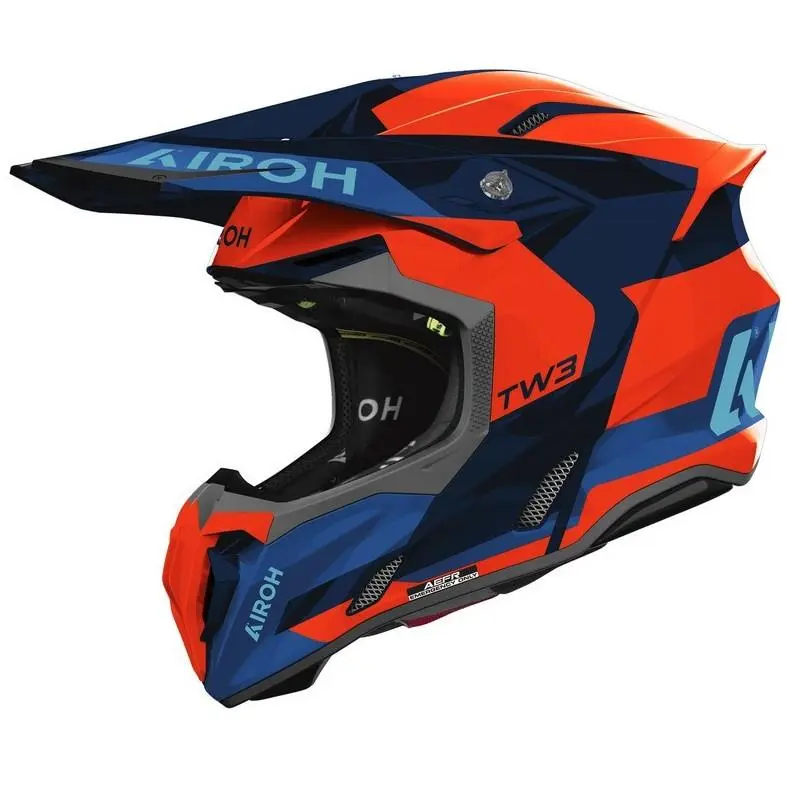
- Airoh Twist 3 Helmet as a light, well-vented off-road helmet example
- Motocross helmets category to compare shells and weights
Whatever weight you save, never compromise fit or certification. A light helmet that rotates on your head is the wrong helmet. Check the basics in our ECE 22.06 motocross helmet guide before you buy.
Vented And Lightweight Body Armor #
Chest protectors and body armor are where airflow matters most. A lightweight, ventilated protector keeps your core cooler, which directly delays fatigue, while still covering the chest, back and shoulders. Modern graphene and ultralight foam designs weigh a fraction of older hard-shell armor.
- Leatt Chest Protector 3.5 Graphene as a light, ventilated chest protector
- UFO Chest Protector Ultralight 2.0 Bodyguard as an ultralight body armor option
- Body armor category to compare protection levels and weights
Slim Knee Protection: Guards Versus Braces #
Knee protection is the classic weight-versus-protection trade-off. Soft knee guards are light and flexible for trail and trail-style riding, while carbon knee braces add joint support at a small weight penalty. Choose based on your pace and history, not just the gram count.
- Leatt Reaflex Ultralite Knee Guard as a minimal, low-bulk knee guard
- Leatt Airflex PRO Knee Guard as a vented, flexible upgrade
- Asterisk Carbon CELL Knee Brace as a lightweight carbon brace with joint support
- Knee protection category to compare guards and braces
Not sure which side of that trade-off you need? Our knee guards vs knee braces guide breaks down when each one makes sense.
Breathable Jersey And Pants #
Clothing is the cheapest lightweight motocross upgrade and one of the most effective for heat. Laser-welded, perforated jerseys and stretch pants move sweat and air better than older heavy fabrics, so you stay cooler without adding bulk over your armor and knee protection.
- Leatt MOTO 5.5 Ultraweld Jersey as a light, breathable jersey example
- Motocross clothing category to compare jerseys, pants and sets
Fit still drives comfort more than fabric alone. Get sizing right first with our motocross jersey and pants fit guide.
How To Prioritize Your Lightweight Upgrades #
You do not need to upgrade everything at once. Spend where weight and heat cost you the most, then work down. As a rough order of impact:
- Start with the helmet, the highest and most fatiguing weight.
- Upgrade body armor next for cooler core temperature and free movement.
- Match knee protection to your riding pace, not just to weight.
- Finish with breathable jersey and pants for cheap heat relief.
Do Not Trade Away Protection For Weight #
Lighter is only better when the gear still protects you. Confirm helmets meet a current standard such as ECE 22.06, check that armor still covers the impact zones you need, and make sure every upgrade fits and stays in place when you ride. A gram saved is wasted if the gear shifts, vents in the wrong place or fails on impact.
- Verify certification before choosing a lighter helmet.
- Keep the coverage you need; do not drop a back protector to save weight.
- Test every upgrade in attack position before your first hard ride.
Recommended RevBorn Links #
- Airoh Twist 3 Helmet – light, well-vented off-road helmet
- Leatt Chest Protector 3.5 Graphene – light, ventilated chest protection
- Leatt Reaflex Ultralite Knee Guard – minimal, low-bulk knee guard
- Leatt MOTO 5.5 Ultraweld Jersey – light, breathable jersey
- Motocross protection category – compare lightweight gear by type