

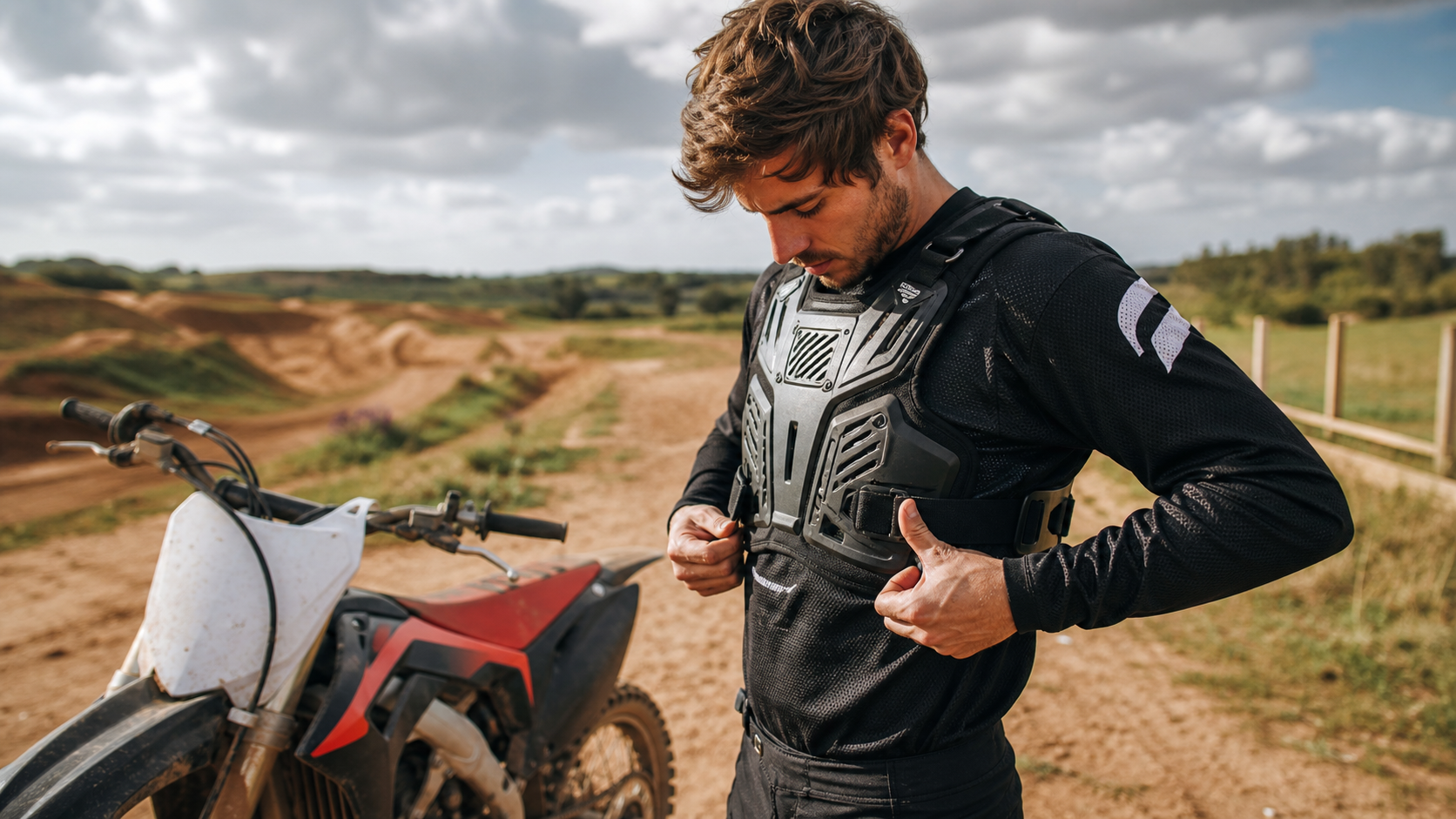
Body armor vs chest protector is one of the most common motocross protection questions. Both can help, but they do not feel the same and they do not cover the body in exactly the same way. The right answer depends on riding speed, heat, fit and the kind of protection you want under or over your jersey.
What A Chest Protector Does Best #
A chest protector is usually lighter and simpler. It helps shield the front and back of the torso from roost, branches and direct contact. Many riders like it for motocross practice because it is quick to put on and easier to ventilate.
The best chest protector is one you actually wear every ride. If it moves around, blocks your helmet or fights your riding position, size and strap adjustment need attention.
- Good for roost protection and light impact coverage
- Usually easier to wear over a jersey
- Can be cooler in hot weather than full armor
What Full Body Armor Adds #
Body armor can add shoulder, elbow, back and chest coverage in one connected piece. That extra coverage is helpful for riders who train often, ride rocky tracks or want more protection during enduro-style routes.
Because body armor covers more area, fit is more important. It should sit close to the body, allow deep breathing and stay stable when you stand, sit and lean forward.
- Kenny Racing Body Protector Track for a focused body protector option
- Kenny Racing Body Protector Track Youth for younger riders
- Check shoulder movement and jersey compatibility before buying
How To Choose Between Them #
Choose a chest protector if you want lighter, simpler torso coverage for regular motocross. Choose body armor if you want broader protection, especially for shoulders, elbows or longer mixed-terrain rides.
For either option, prioritize stable fit. Protection that rotates or lifts during riding can become distracting and less effective.
- Hot track days: lighter chest protector may feel easier
- Rocky routes or frequent training: body armor may be worth the extra coverage
- Youth riders: check that protection does not interfere with helmet movement
Fit, Safety And Buying Checklist #
Before choosing gear for body armor vs chest protector, check how it fits with the rest of the riding setup. Motocross equipment works as a system: helmet and goggles affect vision, boots affect shifting and braking, knee protection affects pants, and body armor affects jersey sizing.
Do not buy only by color or discount. The best product is the one that fits correctly, stays in place while standing on the pegs and solves the riding condition you are actually facing. If you ride hot, dusty practice days, airflow and lens clarity matter. If you ride wet tracks, mud control and spare gear become more important.
- Check the item with your full riding kit, not casual clothes.
- Move into attack position and make sure nothing pinches, rotates or blocks vision.
- Inspect straps, buckles, stitching, foam and protective panels before every ride.
- Replace gear when fit becomes loose, closures fail or impact protection is damaged.
- Use category pages to compare sizes and styles before choosing one product.
When To Upgrade #
Upgrade when your current gear no longer fits, no longer stays secure or no longer matches your riding pace. A beginner who starts riding faster may need better boots, stronger knee protection or more stable body armor. A rider moving from dry practice tracks into muddy enduro routes may need different goggles, spare gloves and more durable protection.
Small wear signs matter in motocross. Stretched straps, scratched lenses, loose boot buckles, packed-out helmet liners and thin glove palms all reduce confidence. Replacing one weak item often improves the whole ride because the rider can focus on line choice instead of fighting equipment.
Recommended RevBorn Links #
- Kenny Racing Body Protector Track – balanced torso protection for adult riders
- Kenny Racing Body Protector Track Youth – youth-sized body protection option
- Body Armors Category – browse more motocross protection choices
Quick FAQ #
Can I wear body armor under a motocross jersey? #
Yes, many body armor designs are made to sit under or close to a jersey. Check sizing so the jersey does not pull tight across the shoulders.
Is a chest protector enough for motocross? #
For many riders, a chest protector is enough for roost and basic torso coverage. Riders wanting more coverage may prefer body armor.
Should kids wear body armor? #
Youth riders should wear protection that fits securely and does not restrict movement. Youth-specific sizes are important.
Final Buying Advice #
The best motocross protection is the one that fits, stays in place and matches your riding. Start with the coverage you need, then choose the lightest setup that still feels secure.
